

Updated September 27, 2026
Rocket heaters and conventional wood stoves burn solid fuel, but they are not interchangeable—and a fixed claim such as “90% less wood” cannot be applied to every house or installation. Fuel use depends on appliance efficiency, building heat loss, climate, operating habits, chimney design, wood moisture, and whether thermal mass is part of the system.
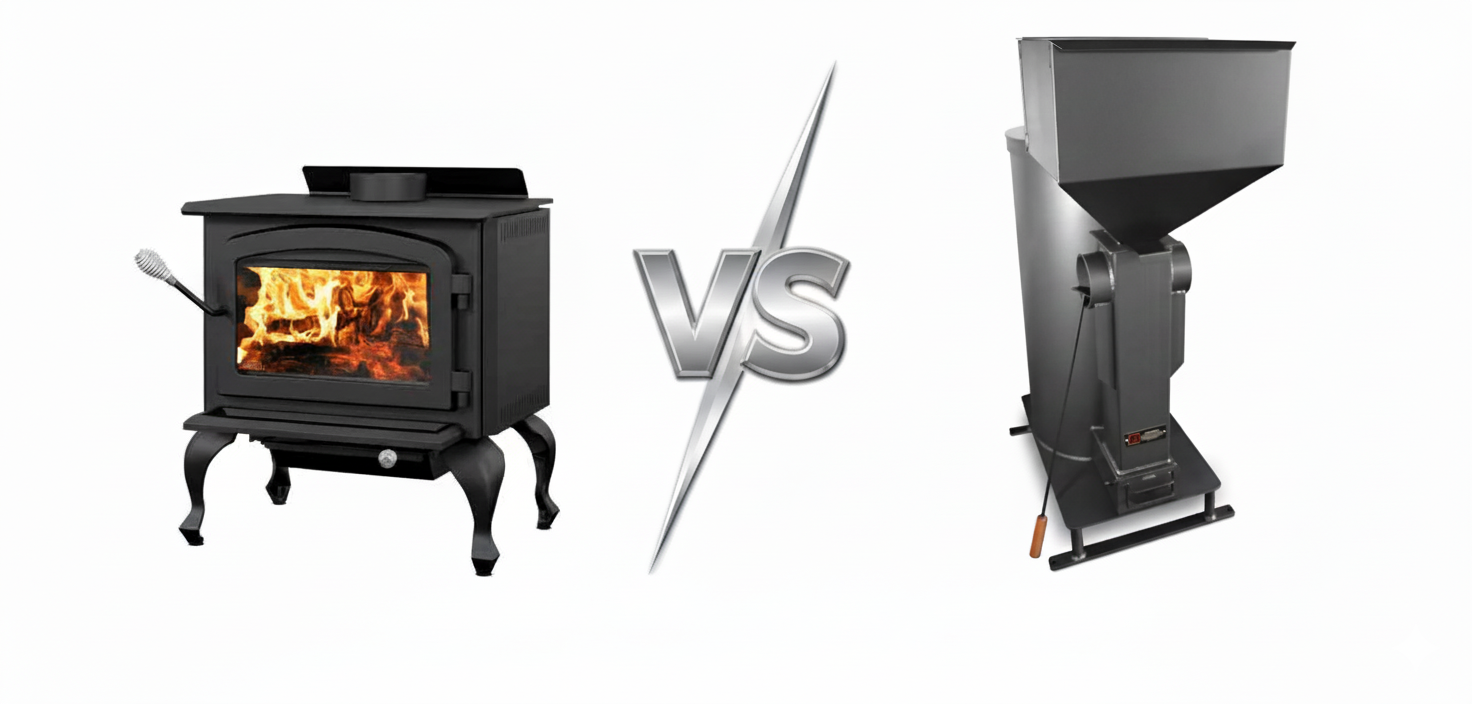
A rocket heater emphasizes a hot combustion zone and strong draft. A rocket mass heater adds a large thermal-storage bench or other approved mass that absorbs heat and releases it slowly. A conventional wood stove usually heats the room through radiation and convection from a listed metal appliance. Do not assume every product called a rocket heater is automatically a complete rocket mass heater.
Listed wood stoves have established installation instructions covering chimney, hearth, clearances, and connector pipe. Site-built rocket mass heaters may face greater code, permitting, and insurance challenges because designs vary. Before purchasing or building either system, consult the authority having jurisdiction and your insurer.
A conventional stove can provide responsive heat after lighting but needs regular fuel and safe overnight operating practices. A mass heater takes time to warm its thermal storage, then releases heat gradually. The better approach depends on building occupancy, insulation, floor plan, climate, and how quickly heat is needed.
Use seasoned fuel within the appliance maker’s specifications. Wet wood wastes energy, increases smoke, and can contribute to creosote. Never burn trash, treated lumber, painted wood, or unsuitable biomass. Compare documented efficiency and emissions information for the exact appliance rather than relying on broad percentages.
Prepper Hideout currently carries the Liberator Rocket Heater without hopper and the Liberator Rocket Heater with pellet hopper. Review the current manual for approved fuel, clearances, chimney requirements, and any permitted thermal-mass configuration. Do not attach an improvised bench or exhaust path.
Choose from documented performance and an installable, insurable design. Either system can be useful, but safe installation matters more than an attention-grabbing wood-savings claim.
Leave a comment