

Updated September 27, 2026
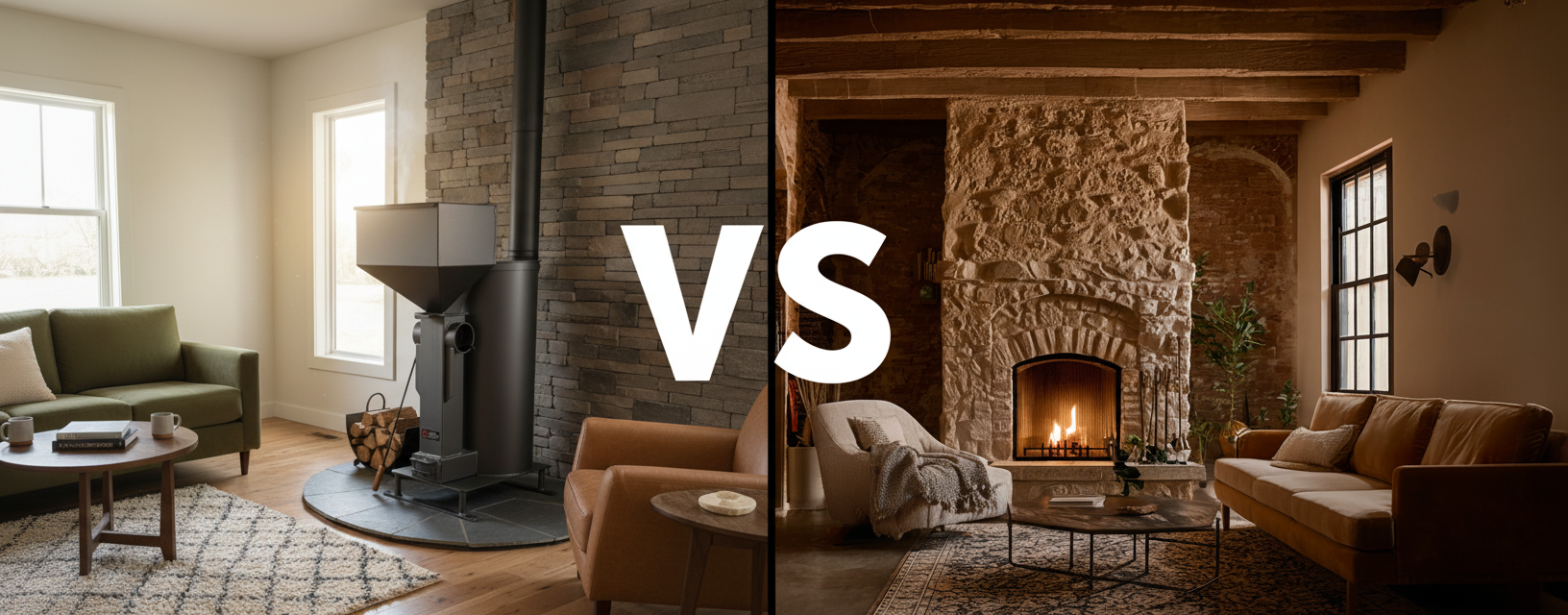
Rocket mass heaters and masonry heaters both store combustion heat in a large thermal mass, but they differ in design tradition, construction, testing, heat delivery, and approval pathways. Neither category is automatically more efficient or less expensive in every building.
A rocket mass heater typically combines a compact high-temperature combustion core with channels or passages that transfer heat into a bench or other mass. Designs vary widely, especially when site-built. Performance and safety depend on combustion geometry, draft, chimney, cleanouts, materials, and an exhaust path that remains serviceable.
A masonry heater burns a relatively intense fire and routes hot gases through internal channels before they exit the chimney. The masonry absorbs heat and releases it gradually. Many systems are based on established plans, standards, kits, or experienced heater-mason practices, but installation still requires site-specific engineering and code compliance.
Both systems favor periodic firing and slow radiant release rather than continuous low burning. A masonry heater can become a major architectural feature with substantial weight and foundation requirements. A rocket mass system may offer more layout flexibility, but unconventional or DIY designs can be harder to permit and insure.
The Liberator Rocket Heater is an active product, but a standalone rocket heater is not automatically a complete rocket mass heater. Use only thermal-mass or venting configurations allowed by the manufacturer and accepted by local authorities. Do not improvise long horizontal exhaust runs or attach a water-heating coil.
Install smoke and carbon-monoxide alarms, burn properly seasoned approved fuel, and have the chimney inspected and cleaned on an appropriate schedule. Accessible cleanouts and clear operating instructions are essential. Any cracking, smoke leakage, poor draft, or abnormal combustion deserves immediate professional evaluation.
A masonry heater may be easier to document through established systems and experienced installers. A rocket mass heater may appeal to owners seeking a different firing pattern or layout. Choose the design that can be safely engineered, permitted, insured, maintained, and operated in your specific home.
Leave a comment