

Updated September 27, 2026
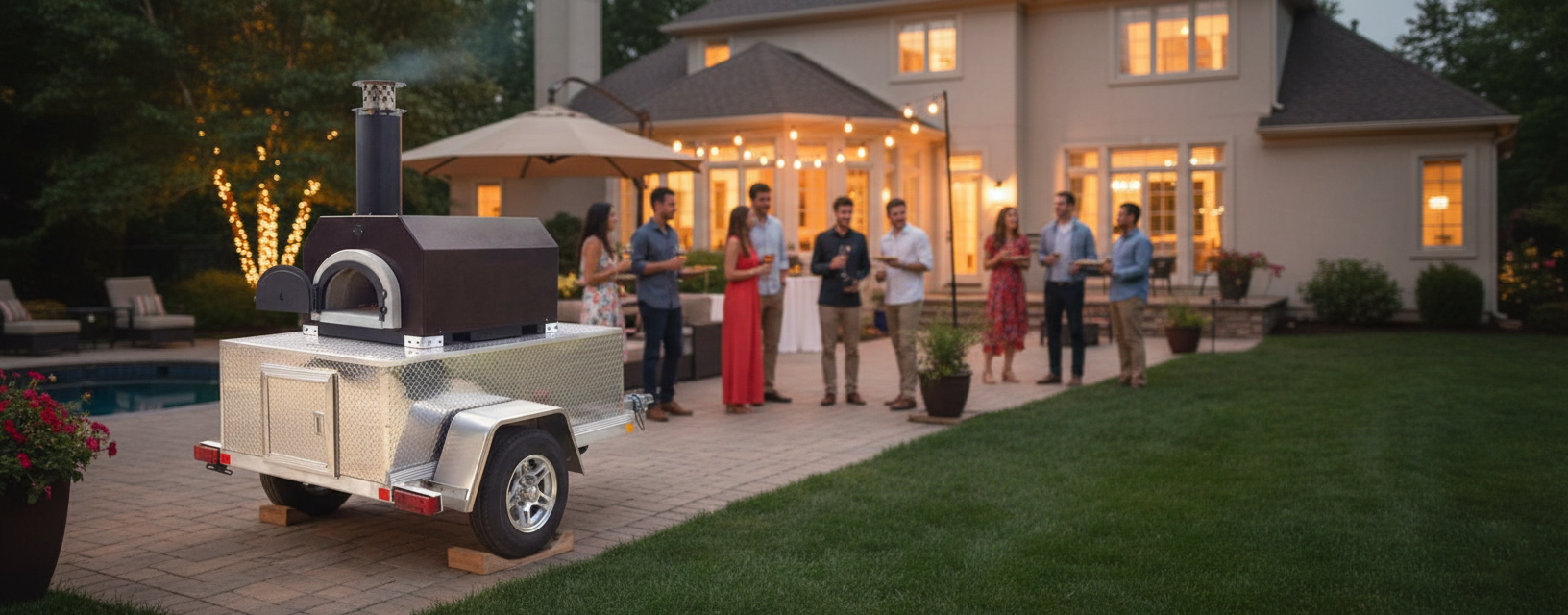
A pizza oven on wheels can make an outdoor cooking area more flexible, but mobility does not make a hot, heavy appliance casually portable. The oven and cart must be engineered for one another, the surface must be stable, and the unit should be moved only when completely cool and secured.
Start with the oven's installed weight and the cart's rated capacity. Confirm that mounting points, fasteners, wheel assemblies, shelves, fuel connections, and required clearances are approved by the manufacturer. A generic utility cart may not tolerate the weight, heat, or center of gravity.
Position the oven before lighting it. Never roll the oven while a fire is burning, while embers remain, or while masonry and metal components are hot.
Wood-fired ovens need dry approved fuel, ash management, and spark awareness. Gas or hybrid ovens require the specified regulator, hose, fittings, leak checks, and fuel type. A natural-gas model is not automatically compatible with propane, and vice versa. Never improvise a conversion.
Prepper Hideout currently carries the active Chicago Brick Oven CBO-750 Mobile Stand Wood-Fired Pizza Oven and the active CBO-750 Mobile Stand Hybrid Pizza Oven. Compare their present fuel requirements, included components, assembled weight, clearances, chimney guidance, and installation manuals before choosing.
Use a fitted cover after the oven is fully cool and dry. Follow the manual for rain, snow, freezing conditions, and long-term storage. Moisture trapped in refractory materials can be hazardous when heated rapidly, so use the manufacturer's drying or curing procedure after prolonged wet weather.
An approved oven can often bake bread and roast other foods, but cookware, temperatures, and cooking methods must remain within the manufacturer's guidance. Do not treat a mobile pizza oven as an indoor emergency appliance; combustion and carbon-monoxide hazards remain even during a power outage.
The best mobile oven combines a proven cart, stable placement, correct fuel system, safe clearances, and manageable storage—not simply wheels added beneath a countertop oven.
Leave a comment