

Updated September 27, 2026
Emergency drinking water cannot be stored “forever” without attention. A long-term supply depends on suitable containers, a safe starting source, clean filling practices, protected storage, routine inspection, and rotation based on authoritative guidance.
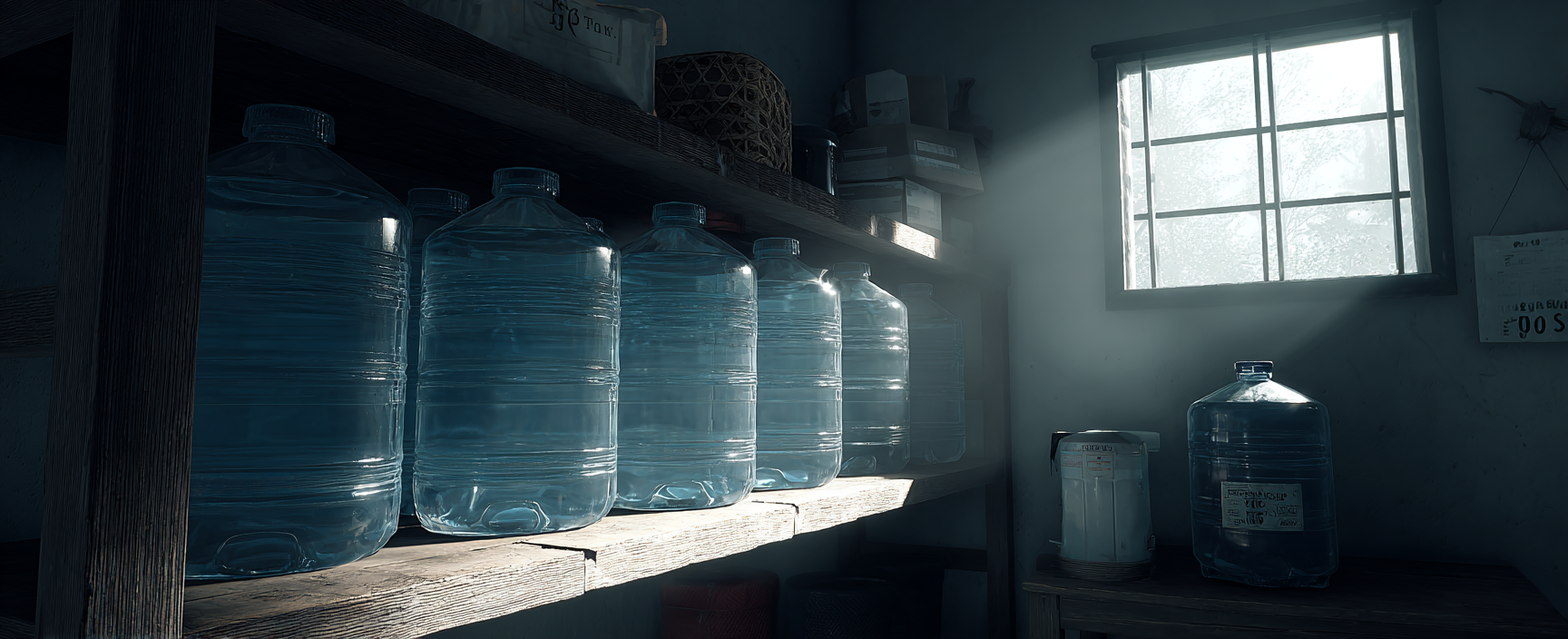
Use commercially sealed water or food-grade containers specifically intended for water storage. Select sizes that can be safely lifted when full; water weighs about 8.3 pounds per gallon. Large drums need a rated floor, a sanitary pump or spigot, and a plan for filling and draining them without contamination.
Do not reuse milk or juice containers for long storage, and never use a container that held chemicals. Follow the container manufacturer’s washing, sanitizing, filling, and closure instructions.
Fill home-storage containers from a potable supply. If public-health authorities recommend treatment before storage, follow their current directions precisely. Chemical concentrations vary, so generic “drops per gallon” instructions can be unsafe or ineffective. Do not add unapproved preservatives or household products.
Check for leaks, cracks, cap damage, swelling, cloudiness, or unusual odor. Follow the schedule recommended by the water or container supplier and recognized emergency authorities. Replace any supply exposed to floodwater, chemicals, or a broken seal. Do not depend on taste as a safety test.
Stored water is the fastest and most dependable first layer. Filtration and disinfection provide resilience when storage runs low, but equipment must match the source. The active Katadyn KFT Expedition Microfilter can be considered for high-volume field filtration within its documented limits. It is not a desalination system or universal chemical remover.
Ready H2O currently has no inventory, and the AquaViable AV-5 is not an active store listing, so neither is recommended here. Browse the current emergency water collection instead.
Long-term water security comes from maintenance and redundancy, not a promise of permanent storage. Keep accurate dates, inspect the containers, practice dispensing water, and rotate the supply before you have to rely on it.
For a larger storage setup, compare potable water storage tanks and verify the selected tank’s intended use, access for cleaning and sanitary dispensing arrangement before purchase.
Leave a comment