

Updated October 12, 2026
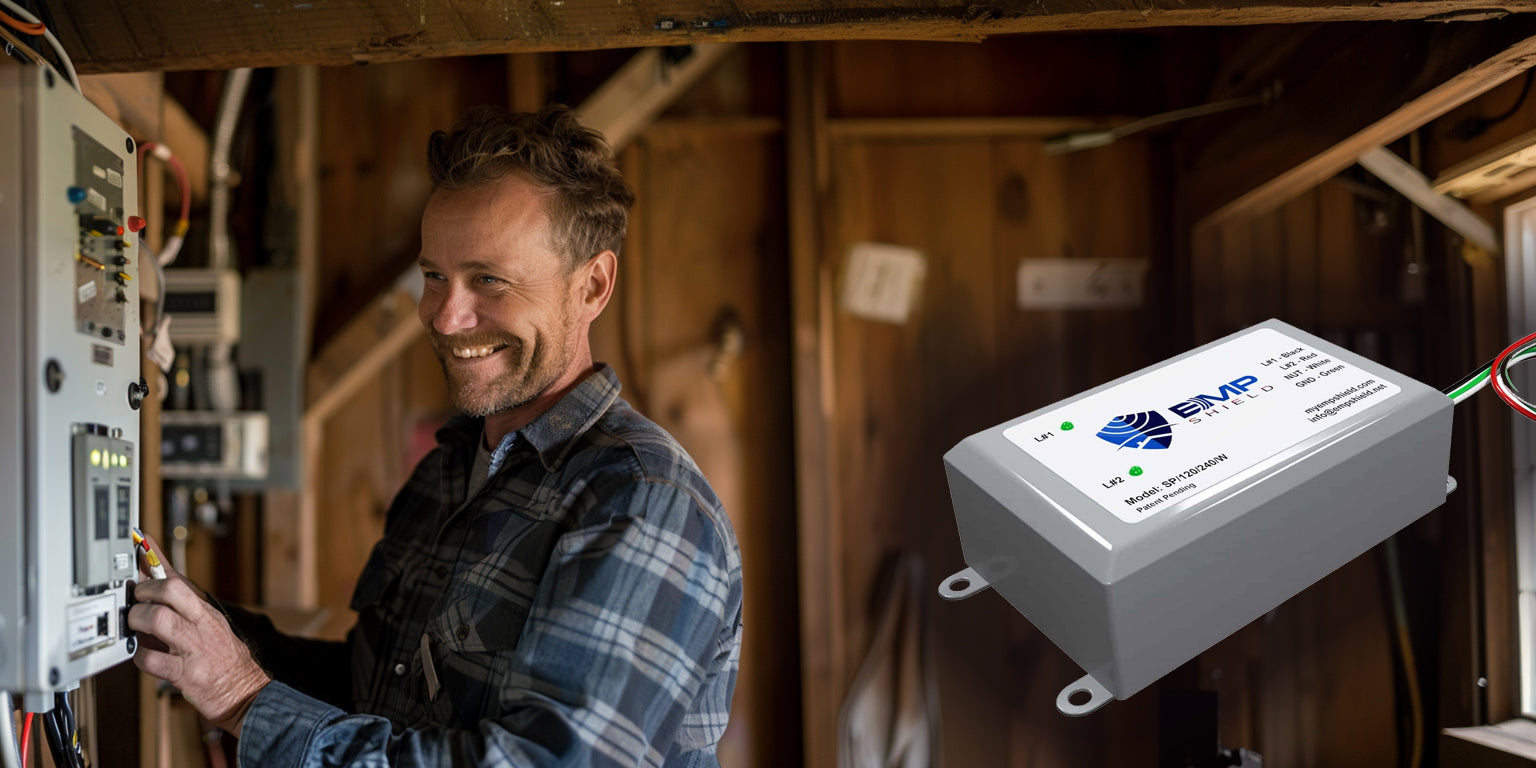
EMP Shield products work by connecting to specific electrical conductors and providing a path intended to divert or limit fast transient energy before it produces damaging voltage across connected equipment. The exact mechanism, rating and installation vary by model; a home-panel unit, vehicle unit and antenna-line unit are not interchangeable.
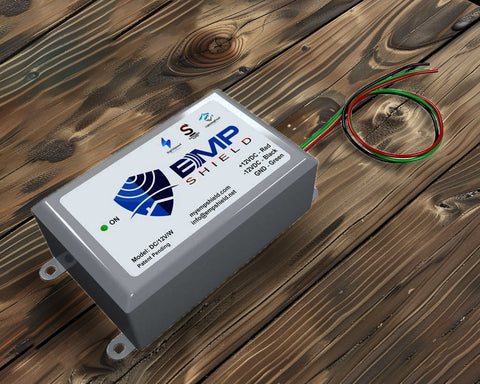
A protection device monitors the voltage relationship between the conductors to which it is connected. When a transient exceeds its response threshold, the device is designed to conduct energy along a lower-impedance path and limit the voltage presented to connected equipment. Performance depends on correct conductor placement, short lead length, grounding and bonding, and the characteristics of the incoming pulse.
Fast pulses contain high-frequency energy. Long, looped or poorly routed leads add inductance and can reduce the effectiveness of a protective path. Follow the model-specific instructions exactly, keep conductors as short and direct as required, and use a licensed electrician for panel or generator work.
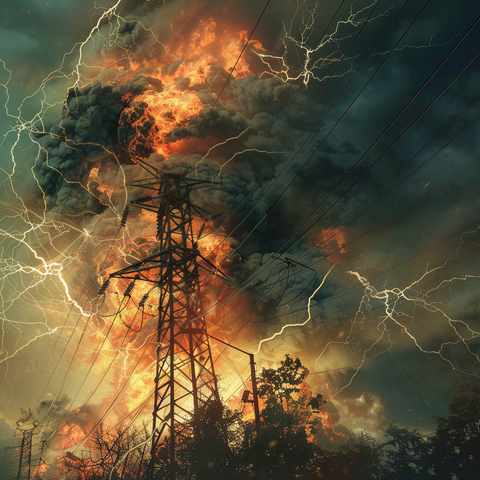
A high-altitude nuclear EMP is commonly discussed as E1, E2 and E3 components. E1 is a very fast pulse that can couple into electronics and conductors; E2 is slower and is often compared with lightning-related stresses; E3 is a long-duration disturbance that primarily threatens long infrastructure conductors.
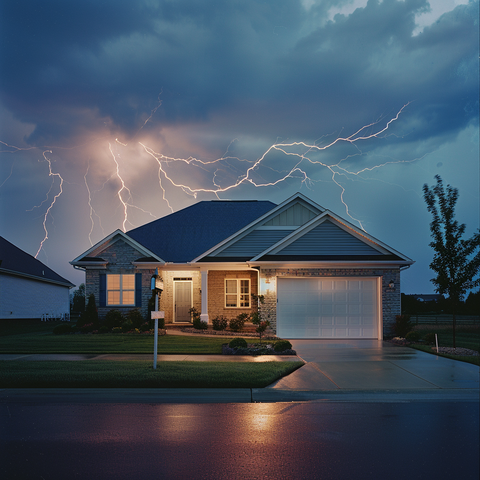
Lightning can inject very high current through multiple paths. A device at the power panel cannot automatically protect coaxial, antenna, network or other conductors. A coordinated lightning-protection design may require service-entrance protection, bonding and protection on each relevant line.
An earth-directed CME can cause a geomagnetic storm and currents in long transmission lines. A home device may help with certain conducted disturbances arriving through service conductors, but it cannot prevent a regional blackout or protect utility transformers.
| Path | Planning question |
|---|---|
| AC power | Is the model rated for the service voltage, phase and grounding arrangement? |
| Vehicle DC | Is it designed for the vehicle voltage and installation point? |
| Generator | Is the model compatible with the generator and transfer equipment? |
| Antenna/coax | Do connector type, frequency range and power rating match the radio system? |
| Ethernet/fiber | Which copper power or data conductors still cross the protected boundary? |
Laboratory testing can show how a specified device and configuration responded to defined waveforms and levels. It cannot reproduce every possible installation or promise that unrelated equipment will survive. Look for the full report, exact model, test method, repetitions, pass criteria and limitations.
EMP Shield works as a connected transient-protection layer, not a force field. Select the correct model, install it exactly as documented, protect other entry paths and keep essential disconnected electronics in appropriate conductive storage.
Start with what EMP Shield can and cannot cover and the active EMP and Faraday protection collection.
Leave a comment