

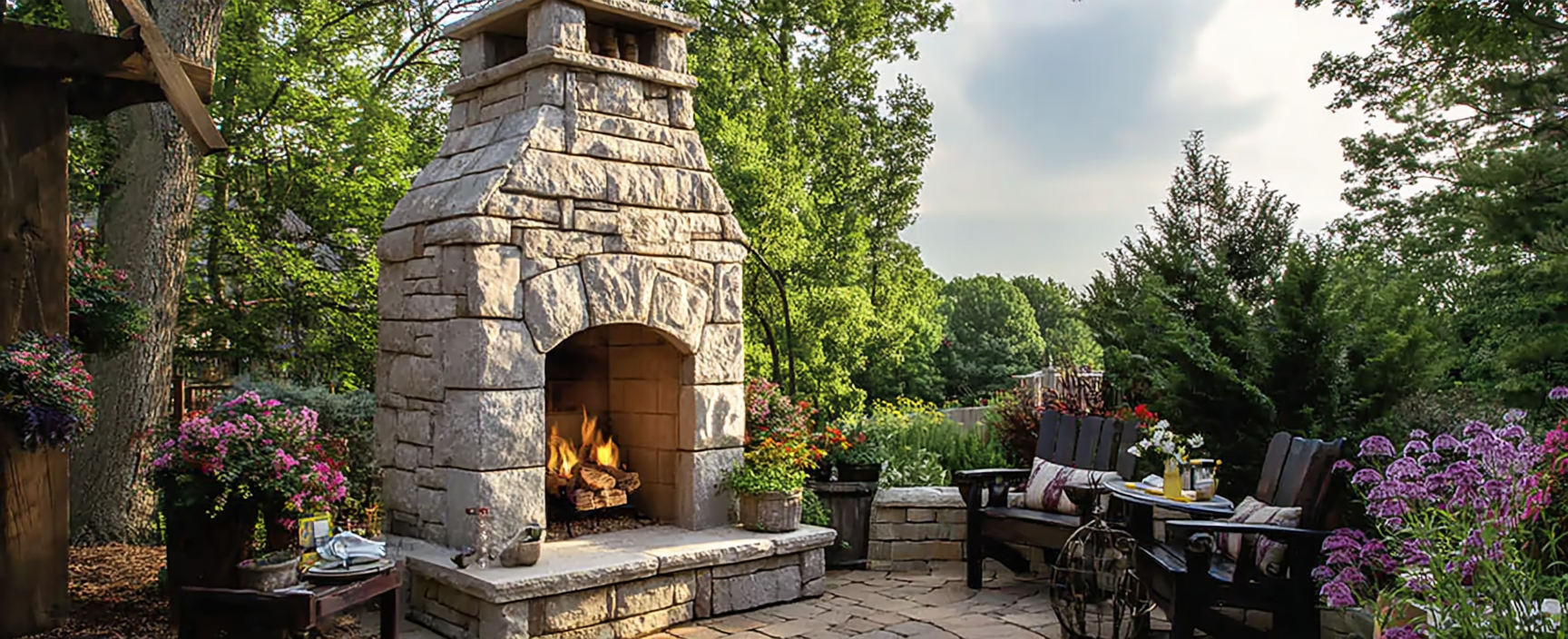
Updated September 25, 2026
An outdoor fireplace can improve how a patio looks and functions, but it will not automatically double a home’s value. Any resale benefit depends on the market, design quality, permits, construction, condition, and whether future buyers value the feature.
The most dependable return is the use your household gets from the space. A well-planned fireplace can create a focal point, extend the patio season, support outdoor cooking, and make entertaining more comfortable. Build it because those benefits matter, not because a fixed appreciation percentage is promised.
The active Stone Age Mezzo pizza oven and fireplace combo kit is one current option. “Vent free” in a product name does not mean it can be placed indoors or under any roof; follow the exact listing, manual, and local requirements.
Include the kit, freight, unloading, foundation, structural support, masonry materials, labor, chimney or venting, gas and electrical work, permits, inspection, drainage, seating, lighting, and weather protection. Difficult site access can materially increase labor and equipment costs.
Contact the building department, fire authority, homeowners association, and insurer before ordering. Confirm setbacks, property lines, overhead clearances, chimney height, fuel storage, and whether the design is allowed beneath a patio cover.
A heavy masonry structure may need a reinforced footing designed for local soil and frost conditions. Poor foundations can crack, settle, or create unsafe separation in the fireplace system.
Wood provides a traditional fire and cooking experience but adds smoke, sparks, ash, chimney maintenance, and possible burn restrictions. Gas offers faster startup and control but requires properly sized piping, shutoffs, ventilation, and qualified installation.
Browse the current outdoor fireplace kits to compare sizes and configurations.
An outdoor fireplace may add appeal, but “2X your home value” is not credible. Evaluate the project by household use, complete installed cost, code compliance, construction quality, and local buyer preferences.
Leave a comment