

Updated September 27, 2026
An emergency water filter should be selected for a defined source and contaminant risk—not because it has the largest percentage printed on the box. No single portable filter reliably handles every combination of sediment, bacteria, protozoa, viruses, chemicals, heavy metals, and salt.
List the sources you may use: treated municipal water under an advisory, a well, lake, river, rainwater, floodwater, or seawater. Each presents different hazards. Floodwater and water near industrial or agricultural sites can contain chemicals that ordinary backpacking filters do not remove. Seawater requires desalination, not a standard microfilter.
Check which organisms and chemicals were tested, the applicable standard, rated capacity, flow rate, operating pressure, replacement criteria, and source-water limitations. Marketing phrases such as “purifies any water” are not a substitute for test documentation.
A household or group system must produce enough water without exhausting the operators. Turbid water reduces flow and element life, so allow dirty water to settle and use an approved prefilter when appropriate. Store spare parts, seals, cleaning tools, and replacement elements.
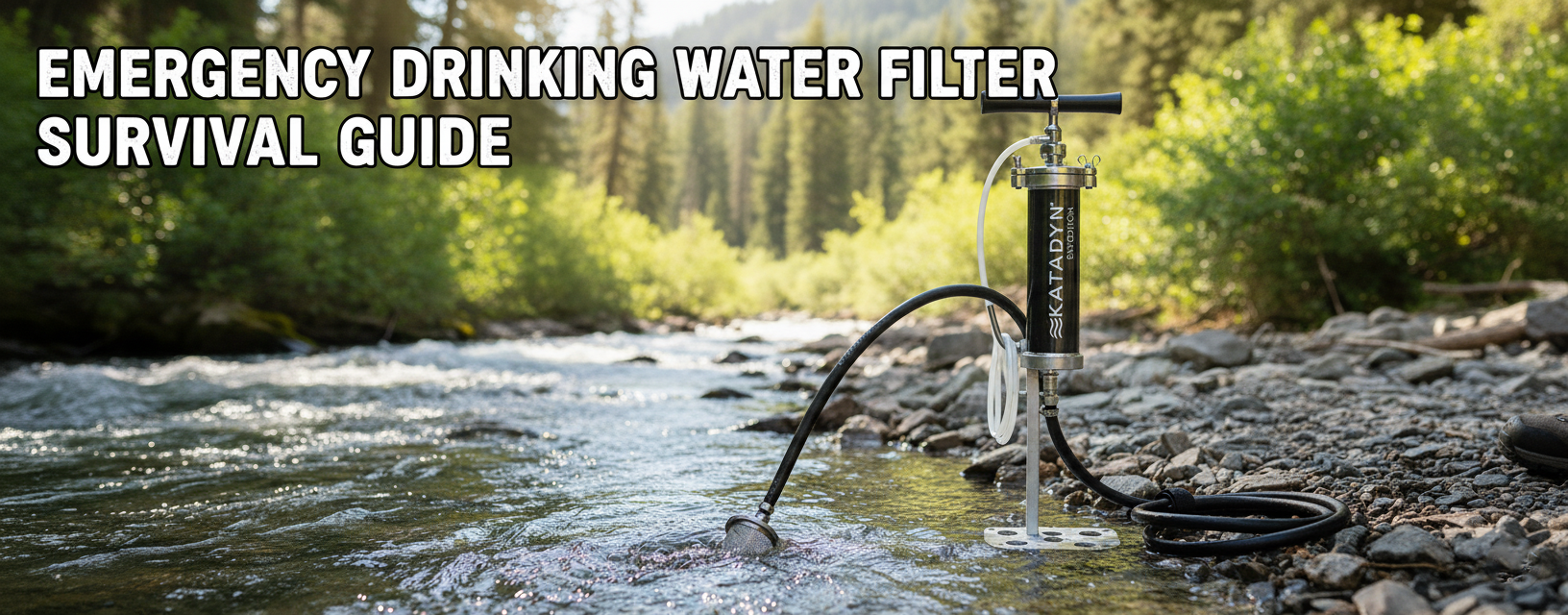
The active Katadyn KFT Expedition Microfilter is designed for higher-volume manual filtration. Review its current specification sheet for the organisms it addresses, rated output, maintenance, element replacement, and storage procedure. It does not automatically make chemically contaminated or saline water safe.
Browse current portable emergency water filtration options, then choose from documented performance against the hazards you actually expect.
Leave a comment