

Updated September 15, 2026.
Which cars are EMP proof? If you are comparing EMP proof vehicles, start with the exact model year, engine, electrical system, and evidence behind the claim. A familiar vehicle name, an older design, or an aftermarket device does not by itself establish that a car will keep running through every electromagnetic pulse.
This guide compares ten vehicles for emergency transportation, explains what published testing actually found, and covers practical EMP protection for vehicles. The list is a starting point for evaluating your options, not a certification that these are EMP proof cars.
An electromagnetic pulse is a brief burst of electromagnetic energy. A nuclear EMP can induce electrical transients that upset or damage electronics. In a vehicle, the practical concern is whether essential systems such as ignition, fuel injection, or engine control stop working. Outcomes depend on the exposure and the vehicle; counting its computers cannot predict the result.
Solar storms need a separate explanation. NOAA describes geomagnetic storms as a threat to power grids and navigation systems. They should not be treated as interchangeable with a nuclear EMP's fast pulse, or as proof that every parked car will be disabled. See NOAA's explanation of geomagnetic storms.
The EMP Commission's 2008 report, printed pages 115–116, describes tests of 37 cars from model years 1986–2002. Exposure increased until a response occurred or the simulator reached approximately 50 kV/m.
This was a limited sample, and testing of an individual car stopped when a response occurred. It does not establish a universal safe model year or prove that any model on our list is EMP-proof. It also does not support the assumption that most modern vehicles would inevitably be permanently disabled.
Even if your car runs, emergency travel still requires usable routes, fuel, and a safe destination. Prepare for disruption beyond the vehicle itself with our blackout preparedness guide.
Prepper Hideout offers EMP Shield for automobiles. The manufacturer markets this vehicle device for EMP and lightning transient protection. It is an option to evaluate for your existing vehicle, with compatibility and installation requirements checked before purchase.

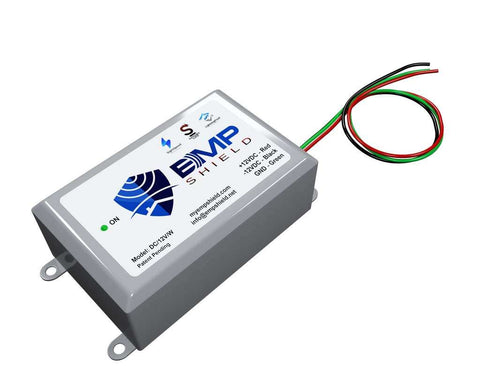
EMP Shield publishes laboratory documentation. The Keystone Compliance report 1902-051E, Revision B includes a DC Series unit in its tested equipment and reports pulsed-current-injection results. Its RS105 radiated-pulse test is identified as applying to Unit 1, the SP Series unit. These distinctions matter when matching a test to a particular product.
The report provides evidence about the equipment and configurations tested. It is not a test of all ten vehicles below with an installed accessory, and it does not justify promising that any vehicle becomes EMP-proof. You can review the manufacturer's testing documentation and installation instructions before choosing a unit.
For help selecting a product, start with your vehicle's year, make, model, and electrical-system details. We can help you identify the information to confirm with the manufacturer.
When comparing the best EMP proof vehicles, focus on a vehicle that is usable, maintainable, and suitable for your family. Treat the following features as questions to investigate when comparing EMP resistant vehicles. They are not substitutes for testing.
Ask what was protected, what was tested, and under which conditions. A component test, an accessory test, and a complete-vehicle test answer different questions. Obtain the report for any claimed protection and check that it applies to the proposed installation.
A manual transmission may appeal to someone seeking mechanical simplicity. However, selecting it does not remove the vehicle's other electrical dependencies. Check the engine management, fuel delivery, ignition, and starting systems rather than assuming that a gear lever makes the entire car EMP-proof.
Older designs may offer simpler systems, but age alone is not evidence of EMP resistance. Inspect the actual vehicle, including engine swaps and aftermarket ignition or fuel-system conversions. Confirm parts availability before buying; an older vehicle is not automatically easier to repair.
Distinguish a mechanically controlled diesel from an electronically controlled one. Diesel fuel alone does not tell you how the engine is managed. The U.S. Department of Energy's diesel-vehicle overview includes an electronic control module and electronic fuel-delivery controls. Verify the configuration of the specific engine you are considering.
Ask for evidence before relying on a vehicle enclosure or shielding modification. A car body, garage, or conductive cover should not be assumed to provide a particular level of EMP protection without testing. Wiring, openings, and the installation details matter. Our guide to shielding and protecting electronics from EMP explains the difference between an enclosure and protection for connected electrical circuits.
Compare fuel consumption, passenger space, and the supplies you need to carry. Compact size can be useful for a travel plan, but it does not establish that a vehicle is less vulnerable to EMP damage. Choose enough capacity for the people and equipment actually traveling.
Four-wheel drive, ground clearance, tires, and recovery equipment may matter on your intended route. Evaluate them as mobility features. Off-road capability is not an EMP test result, and a route that looks possible on a map may be unsuitable or closed during an emergency.
Separate convenience electronics from systems required to start and drive. The absence of a large screen does not prove that the engine or transmission operates without electronic controls. Use the service manual to identify essential components.
A maintenance history, suitable spare tire, repair tools, and accessible service information are useful starting points. Choose spares that fit your vehicle and that you know how to install. Maintenance supports everyday reliability; it should not be presented as an EMP-hardening procedure.
Owners and mechanics can help you understand parts availability and repair difficulty. For an EMP-resistance claim, ask for a test report rather than relying on a forum recommendation. A useful assessment identifies the exact vehicle and distinguishes measured results from engineering judgment.
If you are looking for a list of EMP proof vehicles, these ten model lines provide a starting point for comparison. We have not established EMP survival for them. Their order is not a measured ranking of EMP resistance. Compare specific examples using the checklist above.
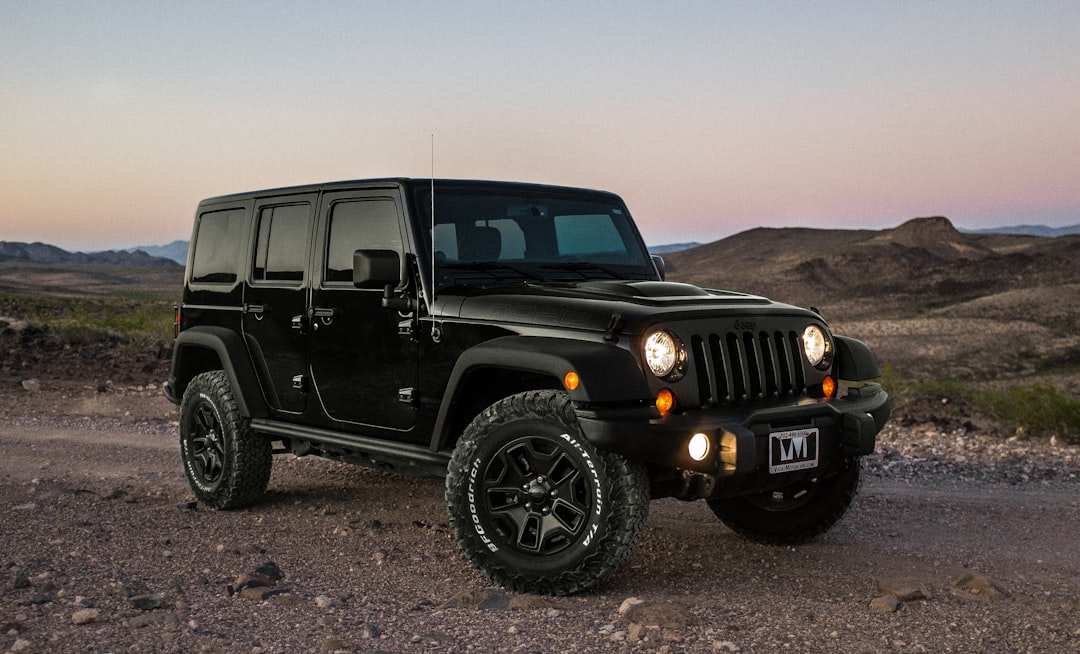
If you are considering a Wrangler for emergency travel, examine its engine, transmission, maintenance condition, and modifications. Do not assume every Wrangler has minimal electronics. Ask whether the specific vehicle meets your route and passenger requirements and how you would diagnose a starting or running problem.
For a Land Cruiser, identify the generation and engine before making a comparison. Check service documentation, parts availability, and the actual condition of the vehicle. A reputation for durability does not establish EMP resistance for every Land Cruiser configuration.
If you need a pickup, compare the Silverado's payload and towing requirements against your actual emergency load. Then inspect the specific engine and electrical systems. Buying an older example does not by itself establish that you have an EMP proof truck.
Evaluate an Outback around your household's seating, cargo, road, and weather needs. Check the model year's service requirements and drivetrain configuration. Neither all-wheel drive nor a practical daily-driving layout proves that its electronics will survive an EMP.
When comparing F-150s, record the exact engine, transmission, and any aftermarket equipment. Consider repair access and the supplies you intend to carry. The F-150 name alone cannot establish EMP protection, and different configurations should not be treated as electrically equivalent.
For a G-Class, confirm the specific generation and powertrain instead of assuming it has basic electronics. Include diagnostic equipment and parts costs in your ownership plan. Its appearance or intended terrain does not provide evidence of tested EMP survival.
Identify which Impala generation you are considering and whether its original engine and ignition systems remain installed. A sedan may suit a plan based on paved routes, but age and body style do not certify immunity to an electromagnetic pulse.
Compare a Tacoma's available space and rated load capacity with the passengers and equipment you need to transport. Inspect its service history and electrical dependencies. Treat EMP resistance as an unanswered test question, rather than a consequence of the truck's name or size.
Specify the Defender's generation, engine, and modifications when researching it. Check maintenance requirements and local repair support before buying. A broad claim about a Defender's simple electrical system should not be applied to every vehicle carrying that name.
For an X5, assess the exact vehicle's maintenance condition, diagnostic requirements, and suitability for your travel plan. We have not verified evidence supporting the earlier claim that its engineering makes it more EMP-resistant. It should not be described as an EMP proof car on that basis.
Use the same questions when comparing other vehicles, including the Chevrolet C/K series, Ford F-250, Dodge Ram 1500, Jeep Cherokee, Ford Crown Victoria, and Honda Civic. None becomes a verified EMP-survival recommendation merely by appearing on a preparedness list.
Keep shielding enclosures and electrical transient protection distinct. An automotive EMP Shield is not a Faraday cage surrounding your engine. Follow the device manufacturer's installation instructions and your vehicle's service guidance; do not improvise wiring or grounding changes.
Start with the electrical system you need to protect, then check a protection device's compatibility and supporting test evidence. For the best EMP protection for vehicles, ask how the proposed installation addresses the relevant equipment and what remains outside the test's scope. Seek qualified installation help when needed.
Keep paper maps, written contact information, and a plan that does not depend entirely on a phone or GPS. Turning accessories off is not proof of EMP protection. If storing backup electronics in a protective enclosure, follow its closure and usage instructions and keep them ready for use.
Choose tools and replacement parts using your vehicle's service information and your repair skills. Do not assume a spare electronic module is interchangeable or ready to use without configuration. If a component needs programming, account for that before relying on it as an emergency spare.
Address damaged wiring, loose connections, worn tires, and overdue maintenance. Have a mechanic inspect unresolved problems. This improves your readiness for ordinary breakdowns without implying a tested increase in EMP resistance.
Keep manufacturer instructions and relevant test reports with your preparedness records. Review your routes, supplies, and communication arrangements periodically. A vehicle stored in a garage also needs a realistic protection assessment; see our explanation of whether an EMP can go through concrete.
A model name alone cannot answer that. Exposure, configuration, and operating conditions matter. Use published test evidence where it applies, and do not describe untested cars as vehicles not affected by EMP.
There is no model-year cutoff established by the evidence reviewed here. An older car may have a simpler design, but you need to inspect its actual systems and modifications. A claim such as “all vehicles before 1980 are safe” goes beyond that evidence.
Choose a vehicle you can maintain and use for your family, supplies, and intended route. When comparing EMP safe vehicles or EMP resistant cars, ask what evidence supports those labels. Mechanical simplicity is one consideration; reliability, repair access, and a workable travel plan also deserve attention.
If a seller advertises a vehicle as EMP-proof, request a report identifying the vehicle or configuration tested, the exposure levels, and the pass criteria. Confirm what applies to the vehicle being sold. Prepper Hideout's automotive EMP protection listing is for a protection device, not a tested vehicle.
A truck's size or fuel type does not establish greater EMP resistance. Compare the exact configuration and relevant evidence before choosing between a pickup, SUV, and passenger car.
Choosing among EMP proof vehicles starts with understanding what is known about each specific vehicle. Keep the ten models above as options to investigate, and verify any claim of EMP survival before treating it as a purchasing reason.
For your existing car or truck, review EMP Shield for automobiles, its compatibility requirements, and the linked testing documentation. Combine any protection you choose with maintenance, backup supplies, and a practical transportation plan.

Comments
Leave a comment