

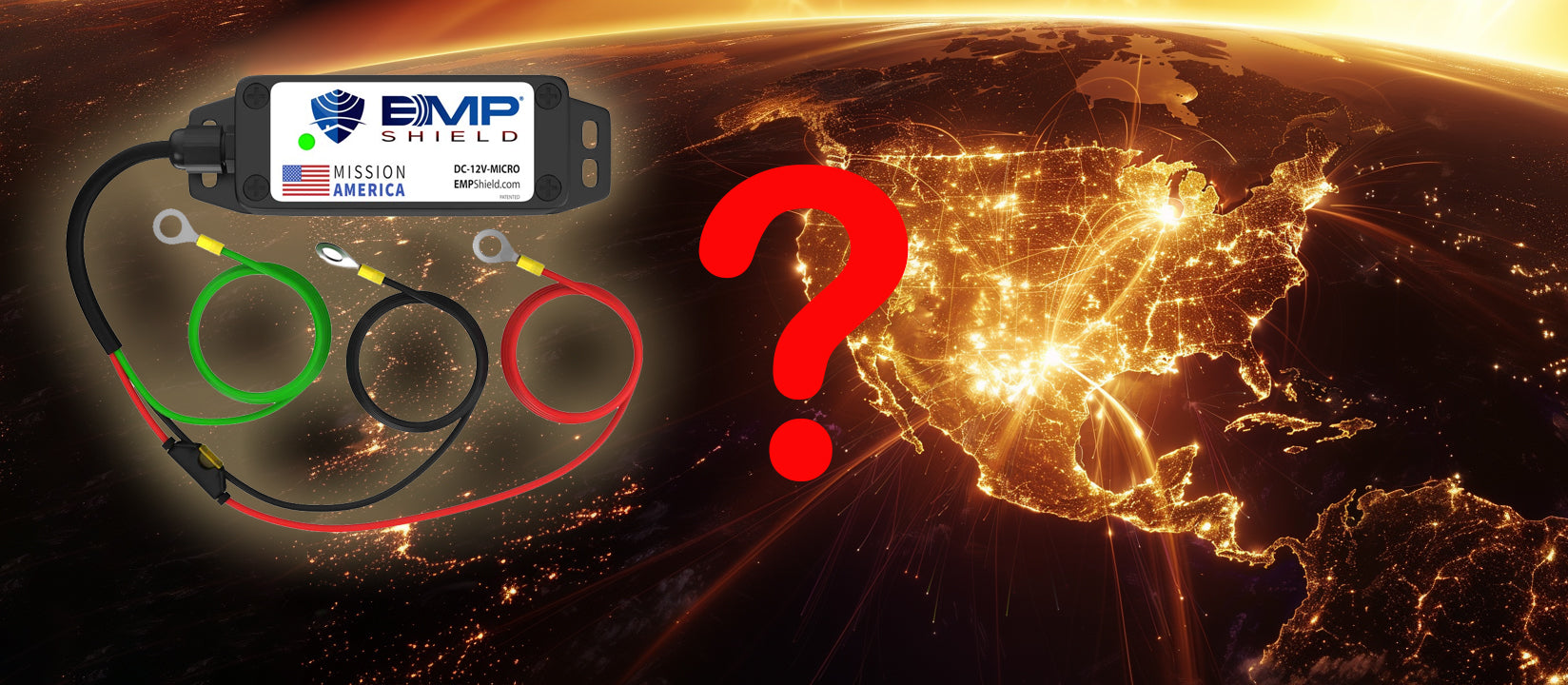
Updated September 19, 2026.
EMP Shield has published laboratory test results supporting its EMP-protection claims for specified equipment and test setups. Whether a particular unit is the right protection for your home, vehicle, or generator depends on its model, installation, and the systems you want to protect. The useful question is what the evidence demonstrates for your intended use.
Disclosure: Prepper Hideout sells EMP Shield products. This is a review of published evidence and buying considerations, not a claim that we independently tested the product in a nuclear EMP.
EMP Shield is a brand of electrical protection devices. The panel-mounted models are described in the manufacturer's instructions as devices for protecting installations from high-voltage transients. They connect to the electrical system. They should not be confused with a Faraday bag or enclosure used to store an electronic device.
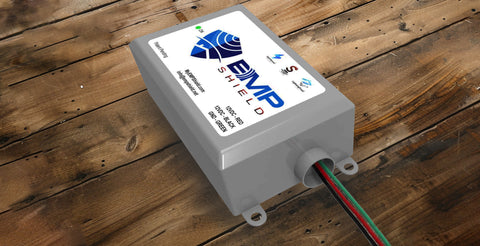
Before comparing products, identify the application: home panel, vehicle, generator, solar equipment, or an antenna connection. A review of one configuration is not a reason to assume that every model or connection has the same coverage.
The Keystone Compliance report 1902-051E Rev. B, approved April 2, 2019, lists compliant pulsed-current-injection and RS105 results. Its equipment table identifies SP, DC, Meter Base, 3P, and ANT units; EU and RL are listed by similarity. The RS105 summary specifies 50 kV/m and a defined cable arrangement. The report limits its results to the equipment tested. Those are meaningful laboratory results, not documentation of every possible residential installation.
Read the equipment table, test configuration, results summary, and detailed data together. Ask the manufacturer to map your current model to the applicable report. A military test-method reference should not be presented as proof that the military endorses a retail product.

These questions make a product comparison useful. Customer comments about ordering and installation can inform service expectations, but an anecdote about a storm is not a controlled test of nuclear EMP protection. This review does not rely on unnamed claims that customers survived an actual EMP attack.
The manufacturer's panel-installation document requires qualified electrical installation, calls for short leads, and warns about sustained overvoltage. Use the instructions for the exact model; a generic blog is not a wiring guide. Ask the installer to record the model, installation date, and checks performed.
Obtain the current written warranty and any connected-equipment coverage before buying. Confirm eligible events, exclusions, registration, claim deadlines, replacement charges, and installation requirements. Keep these documents with your receipt. A warranty amount is a contractual coverage limit, not a measured level of EMP protection.
The manufacturer has published different warranty documents over time, including this 2021 warranty document. Check the terms supplied with the product you are purchasing rather than assuming an older graphic or review states today's offer.
For homes, combine an equipment-specific protection plan with a way to manage an outage. Our whole-house EMP protection guide explains the questions for connected electronics, unplugged spares, and backup power.
CISA includes disconnected spare equipment and protective storage among its basic EMP-preparedness measures. That is a reason to plan beyond a single purchase. Its EMP protection guidelines also make clear that mentioning products does not constitute an endorsement.
Solar-storm preparedness also needs an outage plan. NOAA describes how geomagnetic disturbances affect the grid; keeping a device functional and maintaining utility service are separate outcomes.
EMP Shield deserves consideration based on its published test evidence. Our recommendation is to choose it for a documented application, with a suitable installation and clear coverage terms. Ask for a specific answer to “what will this model protect in my setup?” before treating a broad marketing claim as an engineering conclusion.
For the next step, compare our vehicle EMP protection products or the home-panel model. Match the application first, then compare price and installation cost.
Leave a comment