

Updated September 14, 2026
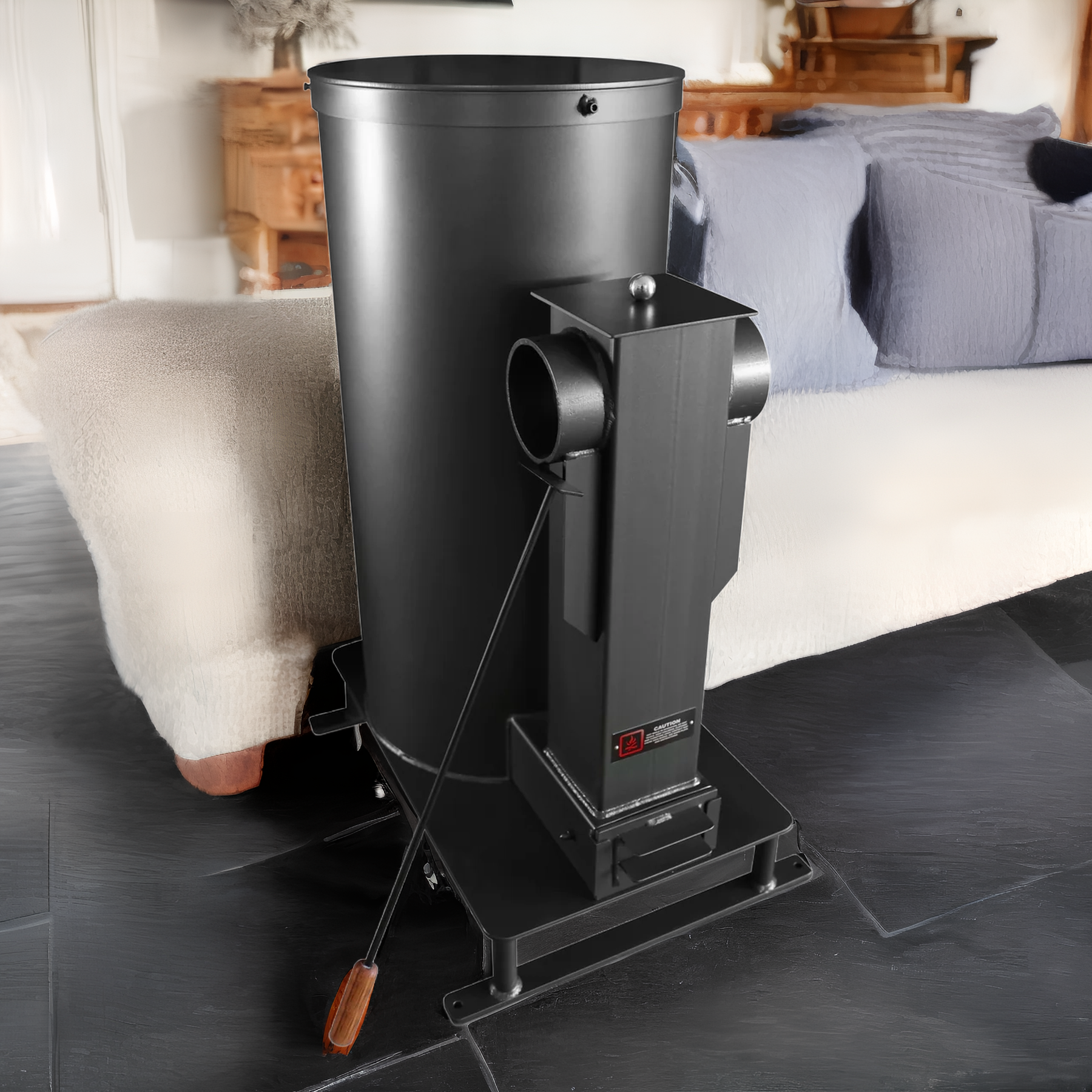
The Liberator Rocket Heater Generation 2 offers wood heating and gravity-fed pellet heating without electricity. Liberator has confirmed that added thermal mass is optional, including when burning small wood pieces.
Manufacturer clarification, September 14, 2026: TaLeah at Liberator confirmed to Prepper Hideout that Generation 2 can burn small wood pieces up to 1.5 inches in diameter in a standalone installation; added thermal mass is not required. She explained that “cordwood” means ordinary firewood split down to fit and that EPA testing applies only to pellets. For wood use, she says to remove the pellet hopper, pellet feed tube, and burn grate, which are pellet-only components. Follow the manufacturer’s full operating instructions and confirm the installation requirements for your property.
The Generation 2 is a solid-fuel heating appliance built with steel and insulating refractory ceramic. Liberator offers it with or without the pellet hopper. The hopper supplies pellets by gravity, so pellet feeding does not require an electric auger. Liberator: Generation 2 with Pellet Hopper.
That makes it worth considering for an outage-heating plan. It still needs an appropriate installation and a supply of suitable fuel; owning the appliance alone does not establish that every room will stay warm.

Wood and pellets are fuel: burning them releases energy. Thermal mass is material that absorbs heat and releases it later. Although the heater itself absorbs some heat, Liberator uses “integration with thermal mass” to describe adding noncombustible heat-storage material as part of a separately designed installation. The manual discusses routing heat-exchanging pipe through that material; it does not mean the fuel placed in the hopper or feed tube. See pages 12–13 of the RMH-2 owner’s manual.
Yes. Liberator confirms that small, dry wood pieces can be burned without a thermal-mass installation. The pellet hopper, pellet feed tube, and burn grate must be removed for wood use. Ordinary firewood needs to be split down to the size specified for the feed opening; do not treat full-size logs as interchangeable with prepared fuel.
For an approved wood-burning installation, use dry, seasoned wood and follow the model's fuel-size instructions. EPA's archived Burn Wise guidance recommends checking firewood with a moisture meter: wood burns best below 20% moisture. Time in a woodpile alone does not confirm that it is ready. Do not burn painted or treated wood, plastic, or household trash. EPA: Best Wood-Burning Practices.
Yes. Liberator describes the heater with its pellet hopper as a gravity-fed pellet stove requiring no electricity. When comparing packages, check that the hopper and required feed components are included. The manufacturer lists a pellet feed tube, shutoff valve, burn grate, and cleaning rod with its hopper-equipped package.
View Prepper Hideout's Liberator Generation 2 with Pellet Hopper for the available options. If you already own a heater, check compatibility before ordering the separate Liberator pellet hopper.

Liberator's FAQ gives approximately 30–90 minutes between refueling on wood, depending on the fuel, and 12–16 hours on pellets. These are the manufacturer's stated times, not results from a Prepper Hideout test. These estimates depend on fuel and operating conditions.
Use those figures to frame questions about tending the stove. Ask what fuel, loading, and operating conditions apply to the configuration you intend to install. Do not plan around an eight-hour firewood load. Liberator: Burn-time FAQ.
There is no reliable answer based on floor area alone. Liberator's FAQ identifies climate, insulation, ceiling height, and building layout among the factors affecting heating coverage. Have an installer assess the building's heat requirement and how warmth will reach the rooms you need.
Prepare your floor plan, ceiling heights, insulation details, winter conditions, and intended stove location. Explain whether you want supplemental heat or are considering it as the main heat source. That gives the installer a useful basis for assessing suitability instead of relying on a generic “average home” BTU figure.
Use the current manual's clearance diagrams, floor-protection requirements, and chimney instructions for the proposed configuration. An open window is not a substitute for a correctly installed chimney. The manual requires exhaust to vent outdoors and warns against sharing a chimney flue with another appliance.
The heater's surfaces get hot. Keep children, pets, and combustible items away; do not assume a protective contact shield is supplied. Liberator also identifies this as an indoor appliance, not an outdoor stove. Liberator: Installation and use FAQ.
Arrange professional inspection of the appliance and chimney, and maintain smoke and carbon monoxide alarms according to their manufacturers' instructions. EPA's archived guidance recommends annual appliance and chimney inspections. EPA: Wood-burning safety tips.
Liberator's FAQ describes ash cleanout about once a day. Follow the manual's shutdown and cleaning precautions, and take care around the refractory lining. A short ash-cleaning task does not replace chimney maintenance or checks for worn components.
For replacement-part questions, see the Liberator replacement burn grate. Verify the heater generation and part compatibility before ordering.
Compare the full project cost, including the appliance, chimney, floor protection, installation, fuel, and maintenance. This guide does not promise a percentage reduction in fuel consumption or a particular annual saving.
Contact Prepper Hideout with the configuration you are considering and your installation questions. Confirm included equipment and delivery arrangements before placing an order.
Leave a comment